CSTC Safety - CSTC Safety

Blog

Harvest Season Is Busy — Don’t Let Safety Compliance Get Overlooked

Posted by Terra Laverty
03 Sep 2026 02:02 PM


Harvest Season Is Busy — Don’t Let Safety Compliance Get Overlooked

Harvest season is one of the busiest times of year for California agriculture. With equipment running, crews working long hours, and operations moving at full speed, it can also be a time when workplace safety issues are easier to overlook.

At the same time, Cal/OSHA enforcement doesn’t slow down just because harvest is underway.

California Safety Training Corporation (CSTC) has worked with clients during harvest season to help identify and address potential compliance concerns before they lead to an employee injury, Cal/OSHA citation, or costly disruption to operations.

What Are We Looking For During a Safety Audit?

Our field and facility safety inspections focus primarily on Cal/OSHA compliance and conditions that have the potential to result in serious injuries or serious citations.

Rather than concentrating on routine HR or employee-file administration, our safety professionals look at what is actually happening in the workplace.

Some of the areas we may evaluate include:

  • Equipment and machine guarding
  • Harvest equipment and field operations
  • Employee safety training and safe work practices
  • Written safety programs and required procedures
  • Hazard identification and correction
  • Conditions or practices that could contribute to a serious employee injury
  • Observable Cal/OSHA compliance issues
  • Applicable food-safety-related conditions when they overlap with workplace safety
  • Whether established safety procedures are actually being followed in the field

This boots-on-the-ground approach can be especially valuable during harvest, when equipment use, staffing levels, working conditions, and production demands may be very different from the rest of the year.

Finding the Problem Before Cal/OSHA Does

One of the most valuable questions an employer can ask is:

“If Cal/OSHA walked onto our property today, what would they see?”

A written safety program is important, but having a program on paper doesn’t necessarily mean the practices in the field match it.

For example, an employer may have procedures covering machine guarding, employee training, heat illness prevention, or equipment operation. But if an employee removes a guard, a supervisor allows an unsafe practice to continue, required training isn’t being applied, or a hazardous condition goes uncorrected, the employer may still have significant exposure.

An outside safety inspection provides another set of trained eyes to look at your operation from a compliance and injury-prevention perspective.

It’s About More Than Avoiding Citations

The goal of a safety audit shouldn’t simply be to prepare for Cal/OSHA.

The bigger goal is identifying conditions that could seriously hurt someone.

Many significant workplace incidents can be connected to hazards involving equipment, guarding, training, procedures, or unsafe practices that could potentially have been identified beforehand.

Finding those issues early gives employers an opportunity to correct them before someone gets hurt.

Start With One Field or Facility

A comprehensive safety program doesn’t have to begin with a long-term contract.

CSTC can start with a one-time field, facility, or harvest equipment safety inspection. This gives your organization an opportunity to see what we identify, review our recommendations, and determine whether additional services would provide value.

Depending on the size and scope of the operation, CSTC can perform individual site inspections or more extensive audits that include a detailed written report.

For agricultural operations in the middle of harvest, even one proactive inspection can provide valuable insight into conditions that may otherwise go unnoticed during the busiest part of the year.

A Trusted Safety Partner Since 1985

California Safety Training Corporation has been helping employers protect their workers and improve workplace safety for more than 40 years.

Our approach is practical: identify hazards, explain the compliance concern, and help employers determine what needs to be corrected.

Because at the end of the day, compliance matters — but everyone deserves to go home safe.

Is Your Operation Ready for a Safety Check?

If you’re in the middle of harvest or simply haven’t had an outside set of eyes evaluate your operation recently, now may be a good time.

Contact California Safety Training Corporation (CSTC) to discuss a field, facility, or harvest equipment safety inspection.

CSTC Safety
661-377-8300

Since 1985 — helping California employers build safer workplaces.

Blog Series: Isolation of Hazardous Energy (Lockout/Tagout) - Part 3

Posted by Terra Laverty
10 Apr 2026 12:00 AM

Blog Series: Isolation of Hazardous Energy (Lockout/Tagout)

Part3: The Annual Review—Periodic Inspection and Certification of Hazardous Energy Control

Lockout/tagout programs can look solid on paper and still fail in the field. That’s why many regulations and standards require a periodic inspection—commonly an annual review—of energy control procedures. The purpose is simple: confirm that written procedures are accurate, that employees follow them, and that any gaps are corrected before someone gets hurt.

What the annual review (periodic inspection) should cover

  • Procedure accuracy: isolation points match the equipment as-installed (including modifications, retrofits, and new energy sources).
  • Employee knowledge: authorized employees can explain and demonstrate the steps; affected employees understand what LOTO means for their work area.
  • Device adequacy: correct lockout devices are available, used correctly, and in good condition.
  • Verification method: the “try/test” step is performed and documented as required by your process.
  • Group LOTO and shift change: continuity controls work in practice, not just in policy.
  • Contractor coordination: responsibilities and boundaries are clear when outside workers are involved.

Who performs the inspection—and how to run it

Periodic inspections are most effective when they include real-world observation. A competent inspector (someone who understands the equipment and the energy control process) typically:

  • Reviews the written procedure for the specific machine or system.
  • Observes an authorized employee applying the procedure (or walks through the steps in the field when live work isn’t feasible).
  • Interviews the employees involved to confirm understanding—especially around stored energy and verification.
  • Documents findings and assigns corrective actions with owners and due dates.

Many organizations inspect each procedure at least annually and also prioritize higher-risk equipment or procedures that have changed.

The “certification” record: what must be documented

The annual review isn’t complete without documentation. Your certification record should clearly show that an inspection occurred and what was inspected. While requirements differ by jurisdiction, strong records commonly include:

  • Machine/equipment identification (asset number, location, description).
  • Date of inspection.
  • Names of employees involved (the inspector and the authorized employee(s) observed/interviewed).
  • Procedure identifier/revision (so you know which version was reviewed).
  • Findings and corrective actions (what was wrong, what was changed, and by when).
  • Sign-off confirming the inspection was performed and communicated to affected personnel as required by your process.

Common annual-review findings (and how to fix them)

  • Procedures drift from reality: equipment was modified, but the isolation diagram/steps weren’t updated. Fix: update the procedure immediately and trigger retraining for impacted employees.
  • Verification is inconsistent: employees isolate but don’t “try/test.” Fix: clarify expectations and add a verification checkpoint to the work order or permit process.
  • Stored energy steps are vague: “release pressure” without bleed points or targets. Fix: add specific actions (valves/gauges/locks) and acceptance criteria (e.g., gauge at zero).
  • Group LOTO gaps: lock box use is unclear during shift change. Fix: document a handoff method and audit it during real shift transitions.
  • Device shortages: people improvise because the right device isn’t available. Fix: stock standard device kits by area and replace damaged equipment promptly.

Takeaway

The annual review isn’t just a compliance checkbox—it’s your early-warning system. When you consistently inspect procedures, document what you found, and correct issues quickly, you reduce the chance that the next maintenance job becomes a life-changing event. If you haven’t scheduled your periodic inspections yet, set dates now, prioritize higher-risk equipment first, and make sure your certification records are easy to find and complete.

Cal/OSHA reference: Title 8, CCR §3314 requires a periodic inspection of energy control procedures at least annually, along with documentation (“certification”) identifying the procedure inspected, the inspection date, the employees included, and the person performing the inspection.

Blog Series: Isolation of Hazardous Energy (Lockout/Tagout) - Part 2

Posted by Terra Laverty
03 Apr 2026 12:00 AM

Blog Series: Isolation of Hazardous Energy (Lockout/Tagout)

Part 2: A Practical Step-by-Step Lockout/Tagout Process (From Shutdown to Verification)

A good LOTO process is consistent, visible, and verifiable. The exact steps and devices depend on the equipment, but the flow below captures the essentials you want every authorized employee to execute the same way—every time.

Step 1: Prepare and plan the shutdown

  • Define the work: What servicing/maintenance will occur? What parts of the machine will be accessed?
  • Identify all energy sources: electrical, hydraulic, pneumatic, mechanical, thermal, chemical, gravity, and stored energy.
  • Locate isolation points: disconnects, breakers, valves, blank flanges, blocks, pins, chains, bleed points, etc.
  • Check for special conditions: multiple feeds, backup generators/UPS, stored pressure, elevated components, remote controls, automation sequences.
  • Notify affected employees: communicate equipment status, expected downtime, and boundaries.

Step 2: Shut down the equipment using normal controls

Use the normal stopping sequence (stop button, HMI stop command, normal valve closure sequence, etc.) before isolating energy. This reduces unexpected movement and helps the equipment reach a stable condition.

Step 3: Isolate the energy sources (not just the controls)

“Off” is not the same as “isolated.” Isolation means physically preventing energy from reaching the equipment.

  • Electrical: open disconnects/breakers, rack out where applicable, or otherwise isolate per procedure.
  • Fluid power: close valves, apply blinds/blocks, isolate pumps/compressors, and use required line breaks only when authorized.
  • Mechanical/gravity: block, pin, chain, or otherwise secure moving parts and raised loads.

Step 4: Apply lockout/tagout devices

  • Use a personal lock for each authorized worker, unless your process uses a group lock box with equivalent protection.
  • Tag for identification and warning (who applied it, date/time, contact information, reason), but remember: a tag is not a physical restraint.
  • For group LOTO: use a lock box or multi-hasp arrangement so each person controls their own exposure.
  • For shift changes: use a documented continuity process so protection is never reduced during handoff.

Step 5: Release, restrain, or otherwise control stored energy

This is where many lockouts fail. Even with isolation points secured, the machine may still have energy in the system.

  • Bleed down air lines and verify pressure is at zero.
  • Discharge capacitors and confirm with appropriate test methods.
  • Block or pin components that could fall or move due to gravity.
  • Relieve hydraulic pressure and secure actuators against drift.
  • Allow hot surfaces to cool (or protect against burns) if cooling is part of the safe state.

Step 6: Verify isolation (try/test)

Verification is the proof step. Use the method that matches the energy type and equipment design:

  • Try: attempt to start the machine using normal controls to confirm it will not operate (then return controls to the safe/off position).
  • Test: use appropriate instruments (for example, testing for absence of voltage) when required by the hazard.
  • Observe: check gauges/indicators and physically confirm valves are in the required position.

Rule of thumb: If you can’t explain how you know the equipment is at “zero energy,” you’re not done yet.

Step 7: Perform the work—maintain control

  • Maintain boundaries: keep guards, covers, and access points controlled as planned.
  • Manage scope changes: if the job expands to new parts of the system, pause and update the isolation plan/procedure.
  • Temporary energization/testing: if equipment must be energized for testing, follow a controlled “remove locks, test, reapply locks” sequence with clear communication and everyone in a safe position.

Step 8: Return to service (remove devices in a controlled way)

  • Inspect the area: confirm tools are removed, guards are reinstalled, and components are intact.
  • Account for people: confirm everyone is clear before re-energizing.
  • Remove lockout/tagout devices: typically by the person who applied them, per your program rules.
  • Notify affected employees: communicate that equipment is going back into service.

Takeaway

Consistency is the point: plan it, isolate it, lock it, control stored energy, and verify it—every time. In the final post, we’ll cover the required annual review/periodic inspection and the documentation (“certification”) that proves your program is working and your procedures are accurate.

Cal/OSHA reference: Title 8, CCR §3314 includes requirements for energy control procedures and their use (including shutdown, isolation, lockout/tagout application, stored energy control, and verification) before servicing or maintenance is performed.

Blog Series: Isolation of Hazardous Energy (Lockout/Tagout) - Part 1

Posted by Terra Laverty
26 Mar 2026 01:00 AM

Blog Series: Isolation of Hazardous Energy (Lockout/Tagout)

Part 1: Hazardous Energy Isolation —What It Is and Why It Matters

Hazardous energy isolation—often referred to as Lockout/Tagout (LOTO)—is the process of preventing the unexpected start-up of equipment or the release of stored energy while people are performing servicing or maintenance. Done well, it protects employees, contractors, and visitors from some of the most severe workplace injuries: amputations, crushing injuries, electrocution, burns, and fatalities.

What counts as “hazardous energy”?

Hazardous energy is more than electricity. Any source that can move machinery, release pressure, create heat, or energize a system can injure someone when it’s uncontrolled. Common types include:

  • Electrical: live circuits, control panels, capacitors, battery systems.
  • Mechanical: rotating shafts, belts, blades, flywheels, springs.
  • Hydraulic: pressurized fluid in lines, cylinders, accumulators.
  • Pneumatic: compressed air in piping, receivers, actuators.
  • Thermal: steam, hot surfaces, heated fluids, cryogenic systems.
  • Chemical: reactive/flammable/toxic chemicals under pressure or with potential for release.
  • Gravity: raised loads, counterweights, elevated machine parts.
  • Stored/residual energy: pressure trapped behind valves, tensioned springs, inertia, residual heat.

Where injuries happen: the predictable failure points

Most hazardous-energy incidents don’t come from “mystery” hazards—they come from steps that were skipped, assumed, or improvised under time pressure. Watch for these common scenarios:

  • Only the power switch was turned off (control circuit) but the energy source wasn’t isolated.
  • Stored energy wasn’t relieved (pressure, gravity, spring tension, residual heat).
  • Multiple energy sources existed but only one was controlled.
  • Someone else restarted equipment because the system wasn’t clearly locked out/communicated.
  • Interlocks/guards were bypassed to “test” or “jog” equipment.
  • Contractor work proceeded without alignment on the site’s isolation process.

The building blocks of an effective energy control program

While regulations and standards vary by jurisdiction and industry, strong programs usually share the same foundation:

  • Clear roles: who applies locks, who is affected by the work, and who verifies the system is safe.
  • Equipment-specific procedures: written steps that match the actual machine, not a generic template.
  • Proper lockout/tagout devices: locks, tags, hasps, group lock boxes, valve covers, breaker lockouts, etc.
  • Training and competency: initial training plus refreshers when tasks, equipment, or risks change.
  • Verification: a consistent method to confirm isolation and a true “zero energy state.”
  • Periodic inspection (annual review): a required check that procedures are accurate and being followed, with documentation/certification.

Takeaway

Hazardous energy isolation is less about paperwork and more about controlling real, powerful forces in a repeatable way. In the next post, we’ll walk through a practical, step-by-step lockout/tagout flow you can use to plan and execute servicing work safely—especially when multiple people or shifts are involved.

Cal/OSHA reference: California Title 8, CCR §3314 (The Control of Hazardous Energy) establishes the requirements for controlling hazardous energy during cleaning, repairing, servicing, setting-up, and adjusting operations.

Lock Out Tag Out - Can you see what's wrong with this?

Posted by Terra Laverty
10 Oct 2024 03:07 PM

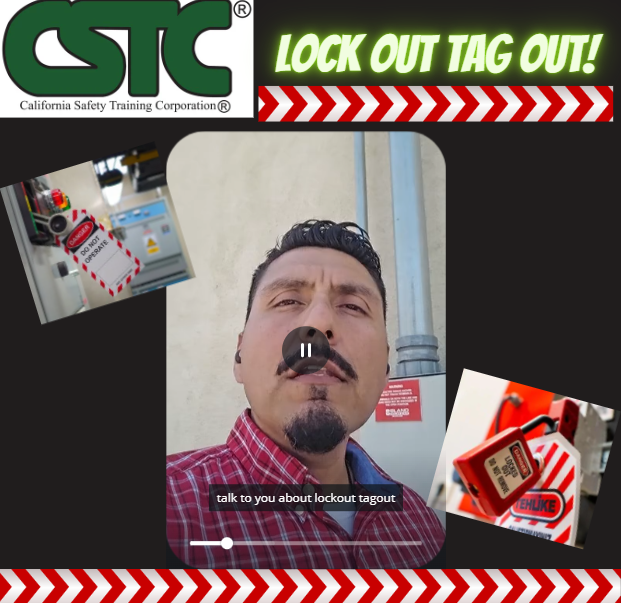
Can you see what's wrong with this lock out?  Click the link below and tell us in the comments.

Watch Now!

https://youtube.com/shorts/NdAZ7UV3KjE?si=cd5JWaP0-W2f3sSF


Workplace Violence Prevention Plan & Training

Posted by Terra Laverty
22 Apr 2024 01:04 PM


The deadline for implementing Workplace Violence Prevention Training and a Written Plan is fast approaching. Employers must ensure they have a robust written Injury and Illness Prevention Program (IIPP) and other safety and health initiatives in place to mitigate hazards and prevent workplace injuries and illnesses.

Starting from July 1, 2024, all employers, including those in construction, agriculture (such as farms, orchards, and vineyards), and other fields, must establish, implement, and maintain a comprehensive Workplace Violence Prevention Plan (WVPP).

Under this plan, all employees must undergo WVPP training during the initial rollout, as well as upon hiring, annually thereafter, and whenever there's a modification to the plan, an incident occurs, or a new violence hazard is identified, whether previously recognized or not.

For numerous employers, the Workplace Violence Prevention Program (WVPP) might seem straightforward due to their low-risk factors. Nonetheless, it's crucial to examine elements that could potentially endanger employees in the workplace and ensure that these are effectively addressed. Please reach out if you require assistance with your plan or training, or if you simply have a question. We're here to help.

Heat Illness prevention and compliance reminder

Posted by Terra Laverty
31 May 2023 01:43 PM

Heat Illness prevention and compliance reminder

I highly recommend formal Heat Illness Prevention training, which includes a test, supporting employees and supervisors in understanding their responsibilities under the heat illness regulation. 


When performing a Heat Illness program audit my top five elements that I look for include:

  1. Provide 1 quart of water per employee per hour.
  2. Be sure that shade and water is as close as practicable. Ideally within 300 feet.
  3. Make sure employees and supervisors understand symptoms, and that they have a right to take a break whenever they experience any symptoms.
  4. Make sure employees and supervisors know what acclimatization is. If there’s a new employee, Cal/OSHA is likely looking for a buddy system for the first 14 days during acclimatization.
  5. Make sure that you have your heat illness prevention program at the worksite. Sometimes this might mean having the heat illness prevention program in the vehicle or equipment that an employee is using to perform work at day as they may be working independently and not in a set location.


If you have any questions or would like to schedule Heat Illness Prevention training or a program audit please contact us.


Have a great and safe day.


Cal/OSHA Proposed Indoor Heat Illness Prevention Standard

Posted by Terra Laverty
15 May 2023 01:37 PM

Cal/OSHA Proposed Indoor Heat Illness Prevention Standard

California is known for its warm and sunny weather, which can pose a risk for heat illness. Heat illness does not only affect those employees working outdoors under the California sun, it can also affect those indoors, especially during heat waves or in buildings without proper ventilation or air conditioning.

Cal/OSHA has officially proposed an indoor heat illness prevention standard to protect workers from heat-related illnesses in indoor workplaces. This standard would apply to all indoor work areas where the temperature equals or exceeds 82 degrees Fahrenheit when employees are present.

Employers would be required to implements measures to protect workers from heat illness indoors including:

  • Providing access to drinking water, access to cool down areas, and preventative cool down rest periods.
  • Implementing an indoor heat illness prevention program in addition to an outdoor heat illness prevention program (title 8: §3395)
  • Monitoring weather conditions and adjusting work practices as needed.
  • Implementing engineering or administrative controls to reduce heat exposure, such as providing air conditioning or ventilation systems.
  • Training.

In addition, the standard could require employers to provide additional protections for employees working in high-heat areas or under high-heat conditions, including implementing a more comprehensive heat illness prevention plan, conducting pre-shift meetings and monitoring employees for signs of heat illness.

You may read the draft regulation here: https://www.dir.ca.gov/oshsb/documents/Indoor-Heat-proptxt.pdf  The Public Hearing is May 18, 2023.


For more information and to review your current Heat Illness Prevention Program in accordance with title 8: §3395 contact CSTC at 661-377-8300.

Effective January 1, 2023: CA Overtime Rate Change for Agricultural Employees Working for Employers

Posted by Terra Laverty
30 Dec 2022 12:28 PM

Effective January 1, 2023: CA Overtime Rate Change for Agricultural Employees Working for Employers who Employ 25 or Fewer Employees

Effective date for employers with 26 or more employees:

Effective date for employers with 25 or fewer employees:

Overtime (1.5x regular rate of pay) required after the following hours per day/hour per work week:

January 1, 2019

January 1, 2022

9.5 / 55

January 1, 2020

January 1, 2023

9 / 50

January 1, 2021

January 1, 2024

8.5 / 45

January 1, 2022*

January 1, 2025

8 / 40

*double the regular rate of pay required after 12 hours in a workday.

Effective January 1, 2023, California’s overtime rate for ag employees working for employers who employ 25 or fewer employees will change. Ag Employers with 25 or fewer employees will be required to pay overtime for all hours after an agricultural employee works over 9 hours in a day or over 50 hours in a week.

The new requirements are part of the AB 1066 passed by legislature in 2016, this created a timetable for Ag workers to receive overtime pay so that they will gradually receive overtime pay on the same basis as workers in most other industries.

Cal/OSHA Consultation Visits On The Rise

Posted by Terra Laverty
22 Jul 2022 06:59 PM

We have witnessed a rise in Cal/OSHA consultation visits and surprise enforcement inspections this year. Typically, these visits include an analysis of programs such as your Injury & Illness Prevention Program, Heat Illness Program, Training Program, and a walk-through inspection of your worksite.

To stay safe and be prepared, ensure your company safety programs are being implemented and are effective.  This means your programs are current and up to date, employees are experienced in the job being performed and employees have effective training in matters respective to their particular job assignments.

Your programs such as your IIPP and Heat Illness Program are required to be updated and reviewed annually at a minimum or whenever new substances, processes, procedures, or equipment are introduced to the workplace and represent a new hazard. These programs must be readily available for employees to access.

If Cal/OSHA Shows up:

SAFETY COACHING UPDATE SUBMITTED BY BEN W. LAVERTY, III, Ph.D., CSP, FACFE, REPA
 

1.Opening Conference: Issues to be reviewed.

  • a. Have IIPP available
  • b. Have training records available
  • c. Have disciplinary notice(s) available
  • d. Have 5 years of OSHA 300 Logs with current year included
  • e. Have 5 years of OSHA 300A Logs with current year included

2.  Escort Cal/OSHA person to incident scene using route least likely to offer the Cal/OSHA person a view of other operations.

3.  Be truthful and brief when answering questions.

4.  Do not share opinions on: injured individuals, (verbal or mutual), training programs, competency or supervisory personnel at time of inspection (get all available evidence first).

5.  Make copies of or note any statements made by Cal/OSHA inspector.

6.  If inspector takes a picture, a mirror image of that picture MUST BE taken by company personnel, developed, documented and put into the investigation file.

7.  Never argue with a Cal/OSHA representative.

8.  Do not ask if there will be a citation.

9.  Do not say that you think a citation should be written even if at the time you may think one is deserved. (Yet to be discovered evidence could change your mind…you will have difficulty in taking the statement back).

10.  Be on the alert for verbal entrapment. The inspector will often:

  • a. Ask, ask, ask – is the answer the same each time?
  • b. Implying “another” usually higher-ranking individual, said the facts were different.
  • c. Let Cal/OSHA expert draw and report on any preliminary conclusion, not you.
  • d. Don’t get hooked with “what do you think.” Answer with, “I’m holding off on making conclusions until I have all the information.”

11.Closing Conference: Listen and take notes.


1 2 3 4 5 6 ... 9 >>